Amazon's 'Customer Obsession': What It Really Means for Sellers

Ekaterina Rubtcova
Amazon seller since 2018 · Founder of Daniks cookware · Founder of Daniks.AI
My Daniks cookware reached Top-1 in Germany and is currently Top-20 in the USA. To run its PPC I built Daniks.AI — now used by hundreds of Amazon brands. On this blog I share how I actually operate, no courses, no upsells.
Subscribe to our YouTube channel
Subscribe to our YouTube channel for video walkthroughs
Subscribe NowIn 2018 a friend of mine was interviewing at Amazon in Canada — as a developer. He told me the selection process drilled him on Amazon’s leadership principles, and the first one is Customer Obsession. I had just started selling on Amazon, so my reaction was honest: “What customer obsession? All the risk sits on me. I write to Seller Support and get a canned response.”
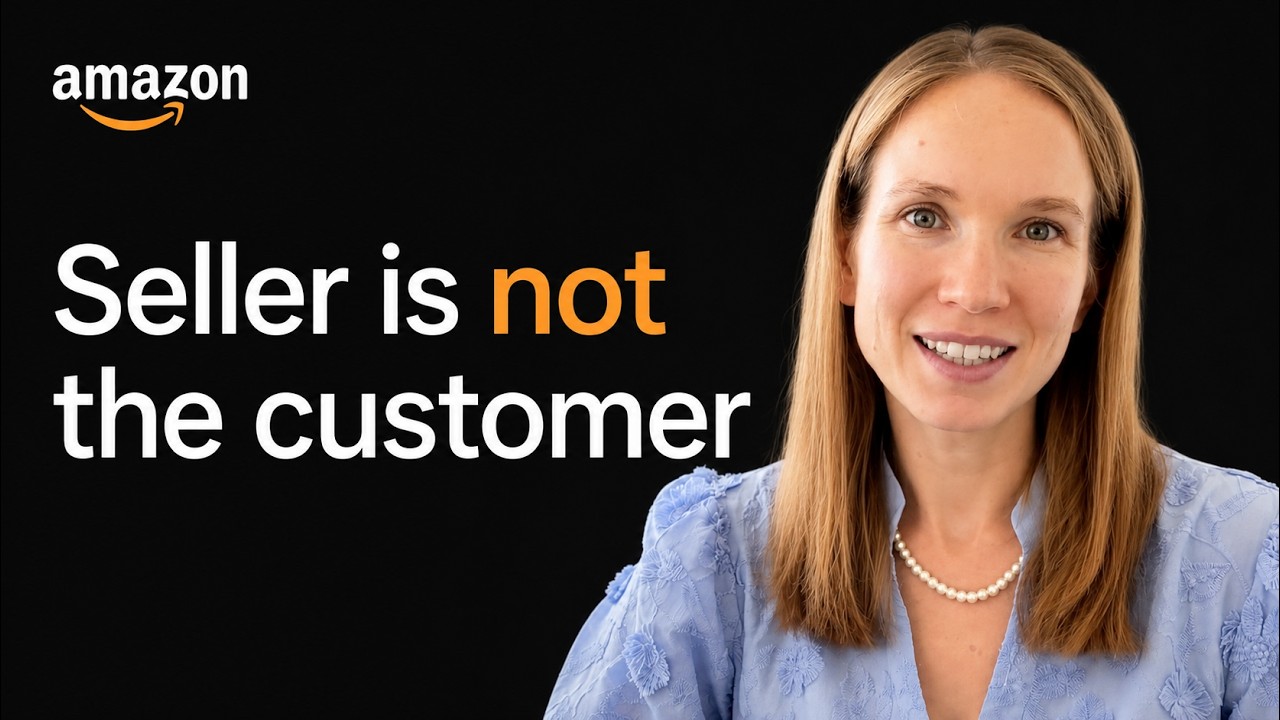
And then it hit me: I’m not their customer.
That one sentence explains more about selling on Amazon than most courses ever will. So let me unpack it — what customer obsession actually is, why it exists, and what it means for the way you run your FBA business.
You Are Not Amazon’s Customer
Amazon is a two-sided marketplace. On one side there are shoppers — individuals who pay money for products. They are the customers, and every ounce of Amazon’s famous obsession is pointed at them.
On the other side there are sellers. We matter at certain moments — when Amazon needs selection, when a category is thin — and the rest of the time the platform does not spend much energy on us. There are millions of us, and Amazon will tell you as much through its actions: some sellers will come, learn, dump prices, and go bankrupt, and new ones will replace them. The flywheel keeps spinning either way.
Once you accept this, a lot of frustrating things stop being personal. The automated support replies, the policy changes announced with two weeks’ notice, the returns granted against your objections — none of it is malice. It is a system optimized for the other side of the marketplace, and you agreed to operate inside it.
Customer Obsession Is Priced In
Here is the part most new sellers miss: Amazon’s generosity toward buyers is not charity. It is unit economics.
While doing my master’s in Amsterdam, I worked on a project interviewing managers at retail chains about how they compete with Amazon. The answer I heard again and again: customers know Amazon is not the place for the lowest price. It is the place for top service — one-to-two-day delivery and no-questions-asked returns. That service level is baked into the prices you see on the platform.
The Christmas tree returned in July, the blender that comes back used and scratched, the 10-15% return rate in some categories — all of it is already factored in. Amazon can afford to obsess over shoppers because sellers like you and me are the ones absorbing the cost of that obsession, unit by unit.
So treat it as a line item. If you sell in a category with a 12% return rate, your margin calculation needs a 12% return assumption — not a hope that your product will be the exception. I’ve written a full breakdown of how to reduce your FBA return rate, but reduction starts with honest accounting.
Great Service Is Economics, Not Kindness
Around 2015 in Moscow, two ride-hailing apps were burning investor money to win the market. You could ride two stops for pennies, in a clean car, with bottled water and a driver asking what music you preferred. Everyone loved it — and everyone quietly understood that once one side won, the subsidized luxury would end. It did. Then people complained that “service got worse.” It didn’t get worse. It became market-priced.
The lesson for sellers: the level of service a platform demands from you reflects competition, not virtue. Amazon operates in mature markets where buyers can click over to Walmart or Target in three seconds. That competitive pressure flows downhill — from Amazon’s promises to buyers, straight into your fee schedule and your returns column.
Culture Sets the Service Bar
Here is a thought experiment I like. You’re standing in a slow-moving hotel check-in line, holding a screaming one-month-old. The clock hits 5:59, and the receptionist announces his shift is over and walks off. The next employee slowly pours himself a coffee in front of the whole line.
Depending on where you grew up, your reaction is different. In some cultures the thought is “he could have stayed five more minutes.” In others, it’s “his shift ended — you’d leave too. Those are boundaries.” In others still, a screaming baby means everyone waves you to the front of the line.
Neither reaction is wrong. But it tells you something practical: customer expectations are cultural, and you sell into a specific culture. The service bar on Amazon.com is set by American retail culture — generous returns, fast responses, the customer given the benefit of the doubt. If you sell there, that is the standard you are measured against, whatever your personal views on boundaries. I saw this contrast firsthand selling on Amazon.de versus Amazon.com — same platform, noticeably different buyer behavior and review culture.
The Story That Made Me Record This
A while ago I paid for a package of ten sessions with an online coach — a large sum for me at the time. Life got busy, I didn’t book for a while, and when I finally scheduled a call, the coach spent it scolding me: I should have booked earlier, I hadn’t been in touch, and she wasn’t sure she wanted to keep working with me. She had never once reached out herself. She just quietly kept the money.
She was operating on “boundaries.” I was expecting service. We were in different cultural contexts, and the money I had already paid made no difference.
I took two lessons from it. First, as a buyer: I don’t hand out large prepayments to prove commitment anymore. Second, as a seller: that feeling I had — paid in full, then blamed by the person I paid — is exactly what a buyer feels when a seller argues with them. You never want your customer telling that story about your brand.
What This Means for Your FBA Business
So customer obsession is a lie in one sense — Amazon is not obsessed with you — and completely real in another: you have to practice it whether you want to or not. Here is how I translate that into operations:
Price the obsession into your margins. Returns, replacements, the occasional abused refund — these are costs of goods sold on Amazon, not surprises. If your numbers only work with a 2% return rate in a 10% category, the product doesn’t work. This is the same discipline as any other beginner-killing FBA mistake: the sellers who fail are the ones who model the best case.
Separate ordinary customers from consumer terrorism. Most buyers are normal people who bring you money. A small percentage will wear the dress, stain it, and return it — and the marketplace will side with them. Fight the clear abuse cases through Amazon’s processes (SAFE-T claims, reporting buyer abuse), but do it coldly, as a process, not a crusade.
Protect the metrics, not your pride. Order defect rate, response times, and feedback are the levers Amazon actually watches. Winning an argument with a buyer while your account health slides is losing.
Know the culture you sell into. US buyers expect more accommodation than German ones; a response that reads as firm in one market reads as rude in another. Write your customer messages for the culture of the marketplace, not your own.
We always tell our team: the customer brings us money. Not the platform, not the algorithm — the person on the other side of that return request. Amazon built a trillion-dollar business by never forgetting that. As sellers we don’t get to opt out of the principle. We just have to apply it with our eyes open and our margins honest.
I tell the full version of these stories — including the coach one — in the video above. If this kind of unfiltered look at the seller side of Amazon is useful to you, subscribe to the channel; that’s where these conversations happen first.
Related articles

Best Amazon FBA Strategy for Beginners in 2026
Discover the Amazon FBA strategy for beginners that works: start with $500 arbitrage, skip the common mistakes, then go private label.

Amazon.de vs Amazon.com — Five Differences That Matter
Taxes, reviews, margins, PPC, returns — five real differences between Amazon.de and Amazon.com from an active seller's perspective.

Amazon FBA Setup: 3 Steps Before Product Research
Most Amazon FBA guides start with product research. They are wrong. The 3 pre-launch decisions, entity, bank, accountant, that shape your business.