Pan-EU vs EFN vs NARF: Which EU Program Is Worth It?
Amazon Pan-EU, EFN, and NARF compared — costs, delivery times, VAT obligations, and which program makes sense for your business in 2026.


On this page

Subscribe to my YouTube channel
Live walkthroughs, listing teardowns and answers to seller questions.
You are selling on one Amazon European marketplace and you are thinking about expanding to others. Amazon offers you three programs for that — and the decision between them determines your shipping costs, delivery times, VAT obligations, and operational complexity for years to come.
Here is the honest comparison. No Amazon marketing language — just the numbers and trade-offs from practice.
The Three Programs at a Glance
EFN (European Fulfillment Network)
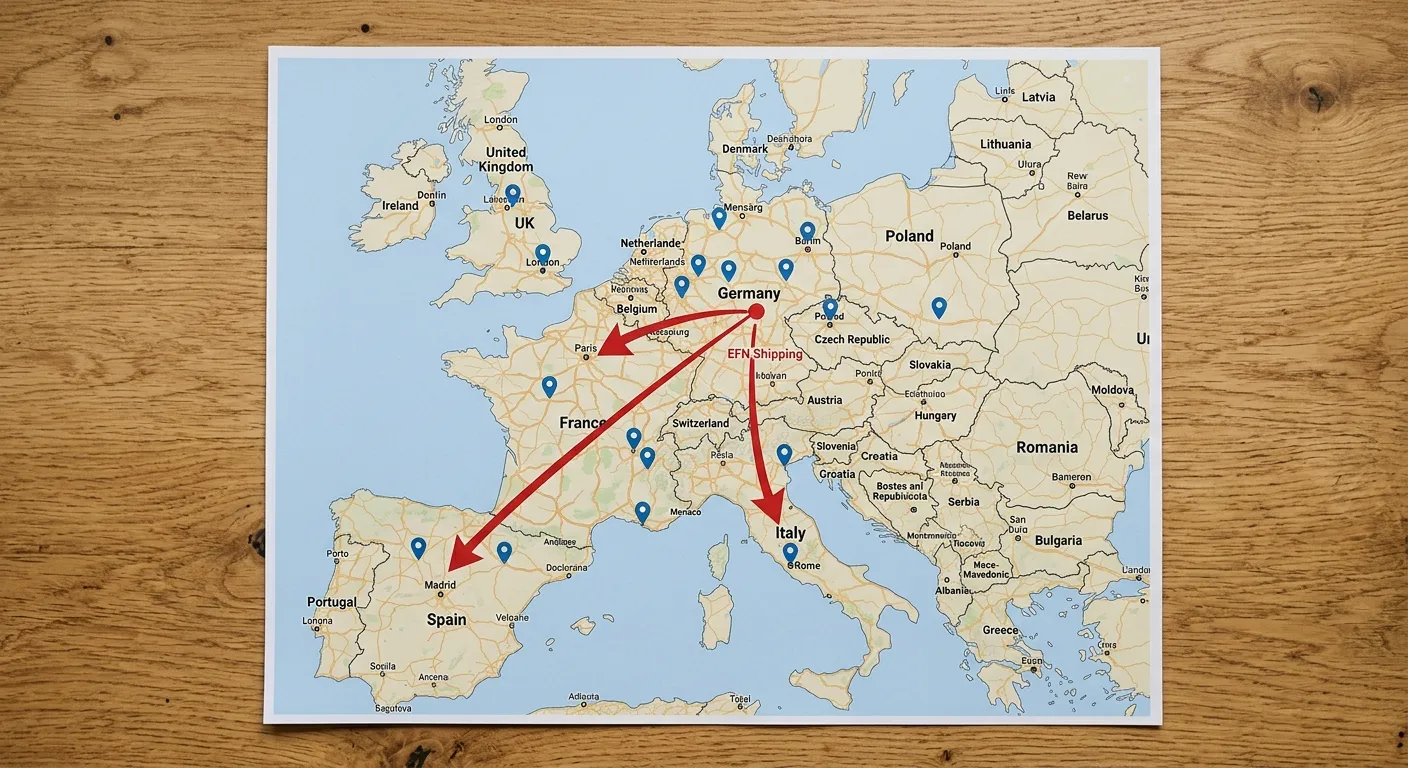
You store your inventory in one country (e.g., Germany) and Amazon ships from there to customers across all EU marketplaces. Amazon handles the cross-border shipping.
Advantage: simplest option. One storage country, one VAT registration (your home country), minimal operational overhead.
Disadvantage: higher shipping fees for cross-border deliveries and longer delivery times. A customer in Italy waits 3–5 days instead of 1–2. No Prime badge in the destination countries (or only with limited delivery speed).
EFN Fees 2026 (example standard-size, 400 g):
- Domestic shipping (e.g., DE to DE): ~€4.50
- Cross-border (e.g., DE to FR/IT/ES): ~€6.50–8.00
The difference of €2.00–3.50 per unit wipes out the margin completely on low-priced products.
Pan-EU (Pan-European FBA)
You enroll in Pan-EU and Amazon distributes your inventory automatically across warehouses in multiple EU countries — Germany, France, Italy, Spain, Poland, Czech Republic, Netherlands, Sweden. Customers get domestic shipping from the nearest warehouse.
Advantage: domestic shipping rates in every country (significantly cheaper than cross-border), faster delivery, Prime badge everywhere, better conversion.
Disadvantage: you need VAT registrations in every country where Amazon stores your inventory. That realistically means 5–7 countries. Each registration costs €300–600 setup plus ongoing costs for VAT filings.
Pan-EU Fees 2026 (example standard-size, 400 g):
- Shipping in every country: ~€4.50 (domestic rate)
- No cross-border surcharges
VAT Costs (through a service provider like Hellotax or Taxdoo):
- Setup for 5 countries: ~€2,000–3,500 one-time
- Ongoing filings: €150–300/month
NARF (North America Remote Fulfillment)
NARF is the counterpart to EFN, but for North America: you store inventory in the US and Amazon ships cross-border to Canada and Mexico. Not directly relevant for EU sellers — unless you already sell on Amazon.com and want to expand into Canada and Mexico.
I mention it here for completeness because Amazon often promotes all three programs together and sellers confuse them.
The Honest Math: EFN vs Pan-EU
Let us take a real scenario: you sell a product for €29.99 with 1,000 units/month on your home marketplace and want to expand to three additional EU countries. Assume 30% of your EU revenue comes from those three new countries (300 units/month).
Scenario 1: EFN (everything ships from one country)
- 700 units domestic shipping: 700 x €4.50 = €3,150
- 300 units cross-border: 300 x €7.00 = €2,100
- Total shipping costs: €5,250/month
- VAT costs: only your home country registration (you already have that)
- Operational complexity: minimal
Scenario 2: Pan-EU (distributed across 4+ warehouses)
- 1,000 units domestic shipping: 1,000 x €4.50 = €4,500
- Total shipping costs: €4,500/month
- VAT costs: ~€250/month (ongoing for 4–5 countries)
- Operational complexity: higher (VAT filings, tax advisor)
Difference: Pan-EU saves €750 in shipping costs but costs €250 in VAT — net savings ~€500/month.
At 300 cross-border units, Pan-EU pays for itself from month one. At fewer than 100 units cross-border, it gets tight — the VAT complexity eats the shipping advantage.
When Each Program Makes Sense
Start with EFN if:
- You just started on your home marketplace and want to test whether EU demand exists
- Your cross-border volume is under 100 units/month
- You are not ready to handle VAT complexity yet
- Your product is higher-priced (over €50) — the €2–3 cross-border surcharge matters less
Switch to Pan-EU if:
- Your cross-border volume exceeds 150–200 units/month
- You see organic demand in at least 2 EU countries
- You are ready to engage a VAT service provider (Hellotax or Taxdoo are common choices)
- Faster delivery times could boost your conversion (in competitive categories, 1-day delivery vs. 4-day is a real conversion factor)
The OSS Simplification Since July 2021
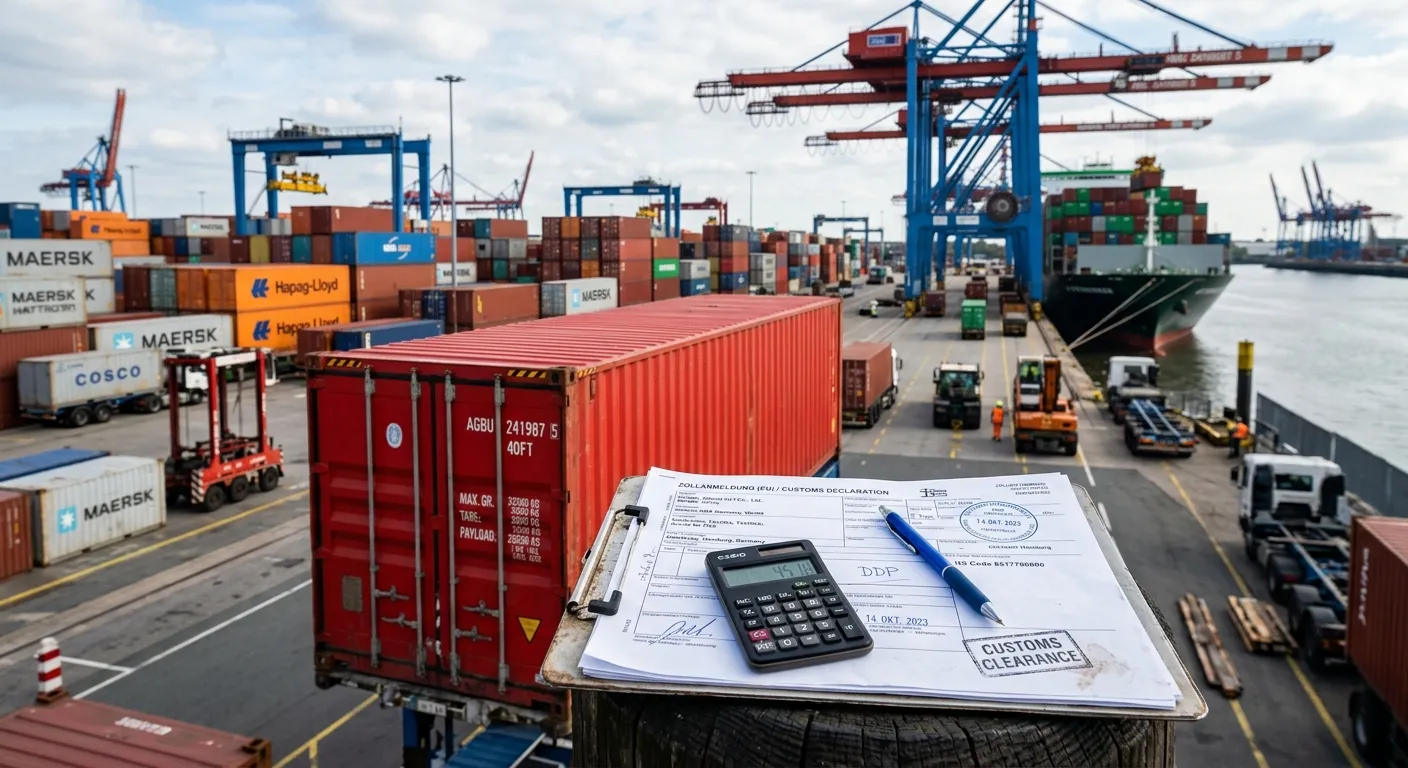
Since the One-Stop-Shop (OSS) launched, you can report B2C VAT centrally through your home country — you no longer need a separate VAT registration in every country for distance selling. But: OSS only applies to B2C sales. If Amazon physically stores your inventory in another country (Pan-EU), you still need a local VAT registration in that country for the intra-community transfer of goods.
This is the point many sellers misunderstand: OSS does not replace Pan-EU VAT registrations.
The Pan-EU Checklist
If you decide to go Pan-EU, here are the steps:
- Engage a VAT service provider — registration in the countries Amazon uses for Pan-EU (currently: DE, FR, IT, ES, PL, CZ, NL, SE). Timeline: 4–12 weeks depending on the country
- Activate Pan-EU in Seller Central — only possible once you have entered VAT numbers in Seller Central
- Ship inventory — Amazon distributes automatically. You do not need to manually send stock to each country
- Activate OSS — report B2C sales centrally instead of in each country separately
- Review listing translations — automatic translations are often poor. Have at least the title and bullets checked by a native speaker
The Hidden Advantage of Pan-EU
Beyond the pure shipping cost savings, there is an effect that many sellers overlook: better ranking in destination countries.
Amazon favors offers with fast delivery in the A9 algorithm. A product with 1-day Prime from a local warehouse ranks better than the same product with 4-day delivery from another country. This ranking boost is hard to quantify in dollars, but among sellers who switch from EFN to Pan-EU, I regularly see 15–30% more organic impressions in the new countries within the first 8 weeks.
Frequently Asked Questions
What is Pan-EU FBA?
Pan-EU is Amazon’s Pan-European FBA program. You enroll, and Amazon automatically distributes your inventory across warehouses in multiple EU countries — currently Germany, France, Italy, Spain, Poland, Czech Republic, the Netherlands, and Sweden. Customers then get domestic shipping from the nearest warehouse, which means cheaper shipping rates, faster delivery, and the Prime badge in every marketplace.
What is the difference between Pan-EU and EFN?
With EFN, you store inventory in one country and Amazon ships cross-border to customers in other EU marketplaces — simple, but with higher shipping fees and longer delivery of 3–5 days. With Pan-EU, Amazon spreads your stock across multiple countries so every order ships domestically at the cheaper local rate, with faster delivery and a Prime badge everywhere. The trade-off is VAT complexity.
What is the difference between EFN and NARF?
They are the same idea in different regions. EFN (European Fulfillment Network) stores your inventory in one EU country and ships cross-border to other EU marketplaces. NARF (North America Remote Fulfillment) does this for North America — you store inventory in the US and Amazon ships cross-border to Canada and Mexico. NARF is not directly relevant for EU sellers unless you already sell on Amazon.com.
Which Amazon EU program is best?
It depends on your cross-border volume. Start with EFN if you are testing demand, your cross-border volume is under 100 units a month, or your product is higher-priced so the surcharge matters less. Switch to Pan-EU once cross-border volume passes 150–200 units a month and you see organic demand in at least two EU countries. There is no single best program for everyone.
Is Pan-EU FBA worth it?
It is worth it once your cross-border volume is high enough. In a sample scenario of 300 cross-border units a month, Pan-EU saves around €750 in shipping but costs about €250 in VAT, for net savings of roughly €500 a month — and it pays for itself from month one. Below about 100 cross-border units, the VAT complexity eats the shipping advantage and EFN stays simpler.
Does Pan-EU require VAT registration in every country?
Yes, in every country where Amazon physically stores your inventory — realistically 5–7 countries. Each registration costs around €300–600 to set up plus ongoing filing costs. The OSS scheme since July 2021 lets you report B2C VAT centrally through your home country, but OSS does not replace these local registrations. If Amazon stores stock in another country, you still need a local VAT number there.
Are there any benefits to Pan-EU beyond cheaper shipping?
Yes, faster delivery also helps your ranking. Amazon’s A9 algorithm favors offers with fast delivery, so a product with 1-day Prime from a local warehouse ranks better than the same product on 4-day delivery from another country. Among sellers who switch from EFN to Pan-EU, I regularly see 15–30% more organic impressions in the new countries within the first 8 weeks.
My Recommendation
Start with EFN, collect 3 months of data, and then decide based on actual cross-border volume. If more than 150 units/month come from other EU countries — activate Pan-EU. The upfront investment in VAT registrations pays back at that volume within 2–3 months.
If you need to brush up on the fundamentals of legal structure and VAT, the Amazon FBA startup cost breakdown covers the financial basics. And for a broader look at selling across European marketplaces, read the US vs Europe comparison.
Questions about your specific setup? Send me a message through the contact form.

Written by
Ekaterina Rubtcova
Amazon seller since 2018 · Founder of Daniks cookware · Founder of Daniks.AI
My Daniks cookware reached Top-1 in Germany and is currently Top-20 in the USA. To run its PPC I built Daniks.AI — now used by hundreds of Amazon brands. On this blog I share how I actually operate, no courses, no upsells.